

In 2023, the United States (U.S.) House of Representatives established the “House Select Committee on Strategy Competition between the U.S.…
Sakoku or Sock oh you? Pondering the 7&i Holdings Takeover Saga and Japanese Economic Nationalism
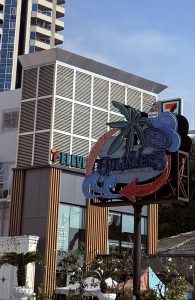
In August 2024, Alimentation Couche-Tard (ACT), the Canadian convenience store operator best known for Couche-Tard and Circle K, launched a $39.9 billion hostile takeover of Seven & i Holdings (7&i), a Japanese global retail conglomerate.[1] The takeover, unconsummated to date, has been a tale of target resistance, boardroom maneuvers, and political hurdles. At issue is not only the future of one of Japan’s most recognizable retail giants, but also the extent to which Japanese economic nationalism will preclude majority foreign ownership.[2] 7&i became vulnerable because recent operating income and earnings per share results have disappointed shareholders. The company also has very attractive assets in regions like North America and Southeast Asia (SEA) while its Japanese operations are highly profitable. As for North America, it has been generating an increasing share of the conglomerate’s operating profit, though trends since 2022 have been unimpressive or poor. Regarding SEA, 7&i stores in countries like Thailand have been propelling increases in profits.[3]
ACT operates 16,700 stores in 31 countries and has a strong presence in Canada, Europe, and SEA.[4] It hopes to expand its global footprint and 7&i fits the bill. Moreover, aside from the appealing traits noted above, 7&i, like many other Japanese companies, has been trading below the valuation of comparable global retailers, opening a “buying opportunity.” This deal, if finalized, would represent the largest-ever foreign takeover of a Japanese company.[5] Complications were inevitable!
7&i reacted negatively to ACT’s offer. It not only rejected the initial buyout proposal twice, but also a later offer in October that was $8 billion richer than the initial one. 7&i contended that the offer undervalued its business and growth strategy.[6] It also charged that ACT would have to sell an “unprecedented number of outlets” to satisfy regulatory concerns.[7] Some Japanese business analysts contend the acquisition will be potentially harmful to the long-term growth of 7&i.[8] Others fret a shift in priorities could potentially reduce new investments in 7&i’s Japanese operations.[9] To block the takeover, 7&i initially explored a management buyout, but it collapsed. Subsequently, it announced a restructuring plan entailing the sale of supermarket and retail operations and a spinoff of its bank. Additionally, it launched a share buyback and dividend increase plan. More recently, it appointed a foreigner, Stephen Hayes Dacus as new CEO, to oversee a restructuring, fend off the takeover, and restore investor confidence.[10] Most, but not all, major shareholders back 7&I.[11]
Turning to politics, Tokyo appears supportive of 7&i’s rejection of ACT. For example, it endorsed 7&i’s August 2024 request to change the firm’s legal classification from a “non-core” to a “core” company, which means foreign entities must notify the government before acquiring greater than 10 percent stakes. Japan’s Minister of Economic Revitalization Ryosei Akazawa endorsed the move, asserting that a foreign acquisition of 7&i is “heavily related” to national security because convenience store supply chains are critical for disaster response and public welfare.[12] The government’s stance would not surprise some. After all, it has long been cautious about allowing foreign investors to control Japanese companies, strategic or not. For some, its response to ACT is emblematic of Japan’s inclination to prioritize domestic control and economic sovereignty.[13]
Should 7&i win, such resistance to foreign investors would be far from unprecedented. In 2006, American firm Cerberus Capital sought control of Seibu Holdings, a sprawling conglomerate, but ran into a solid wall of resistance, with the firm eventually retreating. Another case meriting attention was the state-backed bailout of Japan Airlines (JAL) in 2010. American Airlines and Delta Air Lines made offers, but Japan asked JAL to refrain from accepting them. Instead, JAL opted to accept a $6.6 billion government bailout that featured massive job and pension cuts, the elimination of a large number of routes, and shares becoming worthless.[14] Large takeovers, even if quite rare, do happen, though, as evidenced by Foxconn’s acquisition of Sharp Corp. in 2016.[15] While certainly not the same as takeovers, it should be noted that activist foreign investors repeatedly have spurred Japan companies to implement buybacks, sell of underperforming units, and revamp their Boards and management.[16]
Some Japanese leaders have been trying to put their country on the globalization train. For instance, in 2015, the late Prime Minister Shinzo Abe introduced governance codes to make companies more attractive to investors by promoting transparency, encouraging shareholder activism, and reconsidering traditional practices such as cross-shareholding.[17] In 2023, the Ministry of Economy, Trade, and Industry introduced guidelines to encourage companies to consider unsolicited takeover offers.[18] On the other hand, in 2020, Tokyo tightened foreign ownership for 518 key firms, requiring pre-screening for foreign stakes of 1 percent or more in “critical” industries.[19] To be clear, this was driven by more than economic nationalism.
The temptation is to conclude nothing has changed. Reality may be more complex. In a recent interview, the head of the Japan Investment Corporation Keisuke Yokoo warned Japan might suffer reputational damage if it blocked the ACT takeover on economic security grounds.[20] Separately, a senior Japanese Finance Ministry official emphasized a “core designation” does not change the review process which remains driven by an assessment of national security risks.[21]
The outcome of the ACT–7&i saga remains murky. It seems clearer that Japanese corporate culture appears a continuing barrier for foreign investors. In contrast, Tokyo is slowly adapting to the pressures of economic globalization provided “core” assets are not at stake. Future takeover wars may well be definitional ones.
[1] Anton Bridge, “Couche-Tard advances deal talks for Japan’s Seven & i with access to books,” Reuters, May 1, 2025, https://www.reuters.com/markets/deals/couche-tard-signs-nda-with-7-eleven-2025-04-30.
[2] Kathleen Magramo and Moeri Karasawa, “Masatoshi Ito, Japanese billionaire behind the rise of 7-Eleven, dies at 98,” CNN Business, March 13, 2023, https://edition.cnn.com/2023/03/14/business/japan-billionaire-7-eleven-masatoshi-ito-death-intl-hnk.
[3] Seven & I Holdings Co. “Brief Summary for FY2024 (Year Ended February 28, 2025),” April 9, 2025, https://www.7andi.com/en/ir/file/library/kh/pdf/2025_0409khe.pdf; Seven & I Holdings Co. “Segment Information,” April 10, 2025, https://www.7andi.com/en/ir/financial/segment.html; and Kittisak Phalaharn. “CP All Expands Nationwide in Thailand with 199 New 7-Eleven Stores as Sales Rise 8.8 Percent.” The Pattaya News, November 14, 2024. https://thepattayanews.com/2024/11/14/cp-all-expands-nationwide-in-thailand-with-199-new-7-eleven-stores-as-sales-rise-8-8-percent.
[4] Greg Lindenberg, “Alimentation Couche-Tard Makes Bid for 7-Eleven,” CSP, August 19, 2024, https://www.cspdailynews.com/mergers-acquisitions/alimentation-couche-tard-makes-bid-7-eleven.
[5] Hui Jie Lim, “Why does Couche-Tard want to buy 7-Eleven?” CNBC, September 3, 2024, https://www.cnbc.com/2024/09/03/why-does-couche-tard-want-to-buy-7-eleven-its-a-cheap-stock-say-portfolio-manager-.html; and Greg Lindenberg, “Couche-Tard’s Seven & i Bid a Matter of National Security, Japan’s Economy Minister Says,” CSP, Jan 8, 2025, https://www.cspdailynews.com/mergers-acquisitions/couche-tards-seven-i-bid-matter-national-security-minister-says.
[6] Lindenberg, “Couche-Tard’s Seven & i Bid a Matter of National Security, Japan’s Economy Minister Says.”
[7] Sho Ito, “Seven & i, Canadian firm far apart on takeover bid,” The Asahi Shimbun, March 26, 2025, https://www.asahi.com/ajw/articles/15684339.
[8] 窪田真之, “セブン&アイHDは加社による買収提案を拒否”[Kubota Masayuki, “Seven & i Holdings rejects acquisition proposal from Canada”] Toushiru, September 10, 2024, https://media.rakuten-sec.net/articles/-/46425.
[9] 井村 丈思, “セブン&アイへの買収提案 日本企業と消費者への影響は”[Imura Takeshi, “What does the proposed takeover of Seven & i mean for Japanese companies and consumers?”] NHK, September 6, 2024, https://www.nhk.jp/p/ts/4V23PRP3YR/episode/te/KV14RWJR22.
[10] Ritsuko Shimizu and Rocky Swift. “Japan’s Seven & i announces restructuring, new CEO to fend off $47 billion takeover bid,” Reuters, March 6, 2025. https://www.reuters.com/business/retail-consumer/japans-seven-i-expected-announce-new-ceo-restructuring-plan-2025-03-06.
[11] Dinesh Nair, Manuel Baigorri, and Mathieu Dion, “Couche-Tard Discusses Higher Price for 7-Eleven Owner,” Bloomberg, September 11, 2024, https://www.bloomberg.com/news/articles/2024-09-12/couche-tard-is-said-to-discuss-higher-price-for-7-eleven-owner; and Yurika Yoneda, “7-Eleven Owner Manages to Secure Shareholder Backing Amid Takeover Offer,” Nikkei Asia, May 27, 2025, https://asia.nikkei.com/Business/Business-deals/7-Eleven-owner-manages-to-secure-shareholder-backing-amid-takeover-offer.
[12] Lindenberg, “Couche-Tard’s Seven & i Bid a Matter of National Security, Japan’s Economy Minister Says.”
[13] Jerzy Grabowiecki, “Keiretsu Groups,” Institute of Developing Economies, Japan External Trade Organization, no. 413 (2006): 1-85. https://www.researchgate.net/publication/333134570
[14] Hiroko Tabuchi. “JAL Bankruptcy Filing Sets Off Reorganization and State-Led Bailout,” The New York Times, January 19, 2010, https://www.nytimes.com/2010/01/20/business/global/20jal.html; and Peter McGill, “Friend or foe?” The Asia-Pacific Journal, no. 5 (2021), 10-12, https://resolve.cambridge.org/core/services/aop-cambridge-core/content/view/EC168D35B96082E2809C2EBA5071308A/S155746602103120Xa.pdf/friend-or-foe-corporate-scandals-and-foreign-attempts-to-restructure-japan.pdf.
[15] Makiko Yamazaki and J.R. Wu, “Foxconn Agrees to Buy Sharp after Slashing Original Offer,” Reuters, March 30, 2016, https://www.reuters.com/article/business/foxconn-agrees-to-buy-sharp-after-slashing-original-offer-idUSKCN0WW03O.
[16] Hideyuki Sano and Momoka Yokoyama, “Activist Investors Set Record with $6.6 Billion Spree in Japan,” The Japan Times, Decembre 17, 2024, https://www.japantimes.co.jp/business/2024/12/17/economy/activist-investors-japan.
[17] Nels Hansen, Naoya Shiota, and Jun Usami, “In Japan, resistance to hostile takeovers fades,” White & Case, October 12, 2021, https://mergers.whitecase.com/highlights/in-japan-resistance-to-hostile-takeovers-fades#!
[18] “Japan’s Corporate Governance Revolution,” ECGI, December 9, 2024, https://www.ecgi.global/publications/blog/japans-corporate-governance-revolution-how-unsolicited-takeovers-are-reshaping.
[19] Tetsushi Kajimoto and Daniel Leussink, “Japan tightens rules on foreign stakes in 518 firms, citing national security,” Reuters. May 8, 2020, https://www.reuters.com/article/business/japan-tightens-rules-on-foreign-stakes-in-518-firms-citing-national-security-idUSKBN22K0Z4.
[20] Yukiko Toyoda, Miho Uranaka, and David Dolan, “Blocking 7-Eleven deal on security grounds would hurt Japan’s image, head of state-backed fund says,” Reuters, April 1, 2025, https://www.reuters.com/markets/asia/blocking-7-eleven-deal-security-grounds-would-hurt-japans-image-head-state-2025-04-01.
[21] Makiko Yamazaki and Shimizu Ritsuko. “Japanese companies cannot use national security cover to block takeovers, official says,” The Japan Times, September 3, 2024. https://www.japantimes.co.jp/business/2024/09/03/companies/seven-i-national-security.


